the Surface Of Wisdom
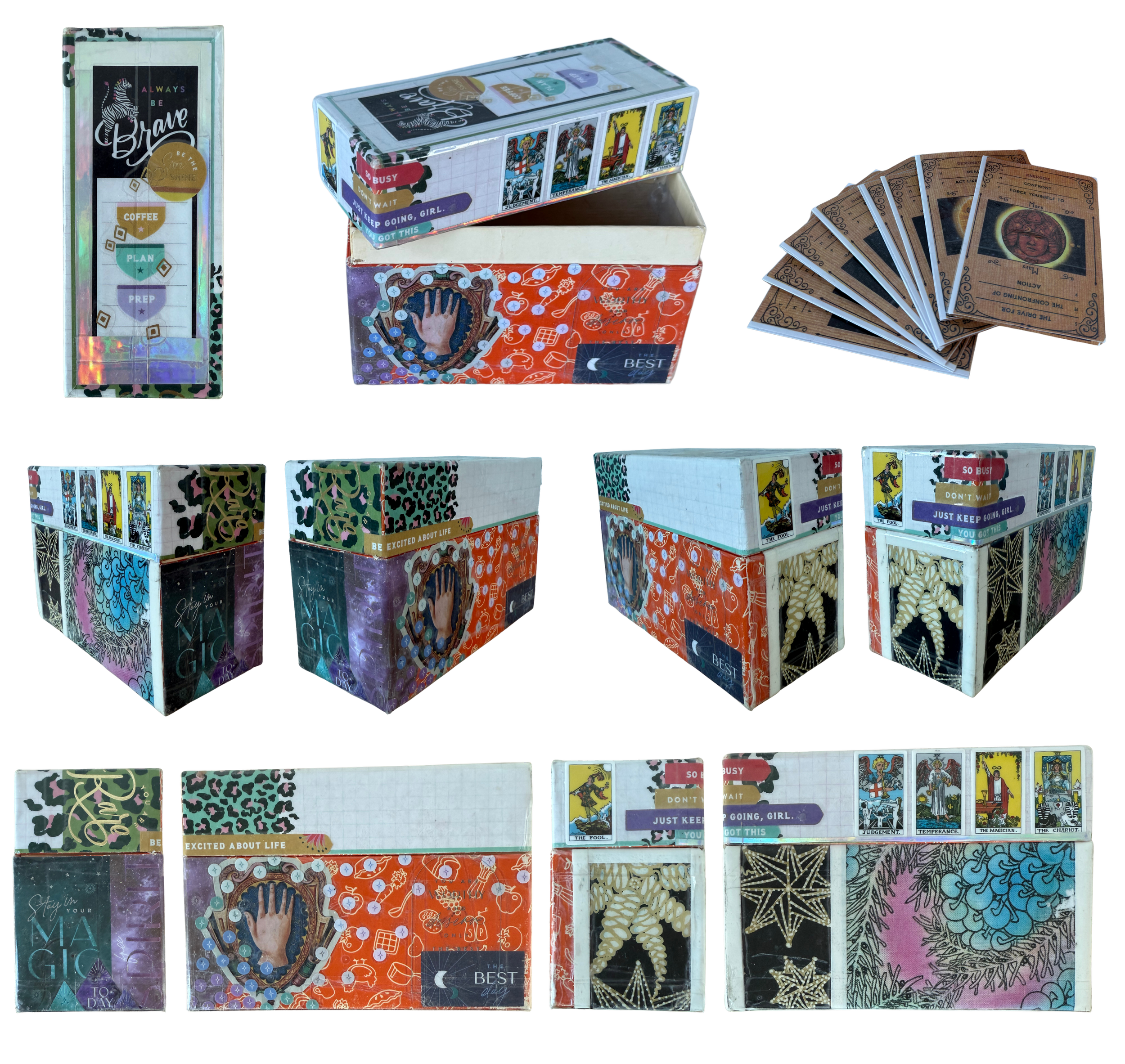
The Celestial Vessel
Therapeutic Reflection
The altered box intervention serves as a physical manifestation of the psychological container. In art therapy, creating a box allows for the exploration of the boundary between the "inner self" (what is held within) and the "outer persona" (what is presented to the world). The process of decorating provides a safe space for clients to organize aspects of their identity, contain their vulnerabilities, and tangibly express their strengths.
By manipulating the exterior and interior of a box, I found that the creator gains a sense of containment, privacy, safety, and control. It transforms abstract anxieties or complex identities into something that can be touched, opened, closed, and put away. This intervention acts as a protective ritual, in which the act of "housing" an idea or theme, such as aging or spirituality, validates that identity while offering the safety of a secure boundary.
Theoretical Application
Altered boxes are deeply rooted in Object Relations Theory and Narrative Therapy. They provide a "holding environment" (Winnicott) where the client can safely explore self-integration.
Externalization: Moves internal conflicts or identities to an external object, making them easier to observe and modify.
Psychological Safety: The lid serves as both a literal and a metaphorical boundary, allowing the client to "shut away" difficult emotions when they are not ready to be processed.
Integration of Self: The use of collage and mixed media within the box allows for the piecing together of disparate parts of a client’s history or personality.
Somatic Grounding: The tactile nature of gluing, painting, and construction engages the senses, helping to regulate the nervous system.
Empowerment through Agency: Making aesthetic choices about what is hidden versus what is visible empowers the client.
Clinical Considerations
When using box decorating in practice, the therapist must consider the lid's intentionality. A box that is glued shut represents something very different from a box that is left open; clinicians should observe these choices as indicators of a client's readiness to share or their need for containment.
Client Goals: Clients should aim for authenticity over perfection. The goal is not a "pretty" box but one that accurately reflects the theme's internal meaning.
Technique Suitability: * Collage: Ideal for clients struggling with verbal expression or those needing to deconstruct media-driven narratives.
Found Objects: Useful for trauma processing, where objects represent specific memories or "evidence" of survival.
Painting/Doodling: Best for emotional regulation and accessing a "flow" state to reduce acute anxiety.
Artist Statement(s)
“The Surface of Wisdom”
This altered box serves as a direct counter-narrative to the exclusionary standards of beauty and youth in modern media. The exterior has serene images of clouds and the shoreline—natural elements that find beauty in constant change and erosion.
The interior houses fragmented photographs of aging skin, silver hair, and fine lines. By inviting the viewer to piece together these "imperfections" like a puzzle, the project reframes aging not as a loss of beauty but as a realistic and normative evolution. It encourages an identification with the authentic self, honoring the "gold" found in lived experience.
“The Celestial Vessel”
Explicitly designed to house a deck of handmade spirit cards, this box utilizes whimsical patterns, astrological symbols, and mystical imagery to create a sense of sacred space. The unique, vertical proportions and the "Be Brave" motif on the lid transform the act of choosing a card into a ritualized experience and embrace spiritual awareness.
The box enhances the spirit cards by providing them with legitimacy and weight. The vibrant leopard prints and tarot-inspired collage work signal that the contents are special and intentional. By creating a custom "home" for these cards, the artwork validates the creator’s intuition and spiritual practice, elevating the cards.