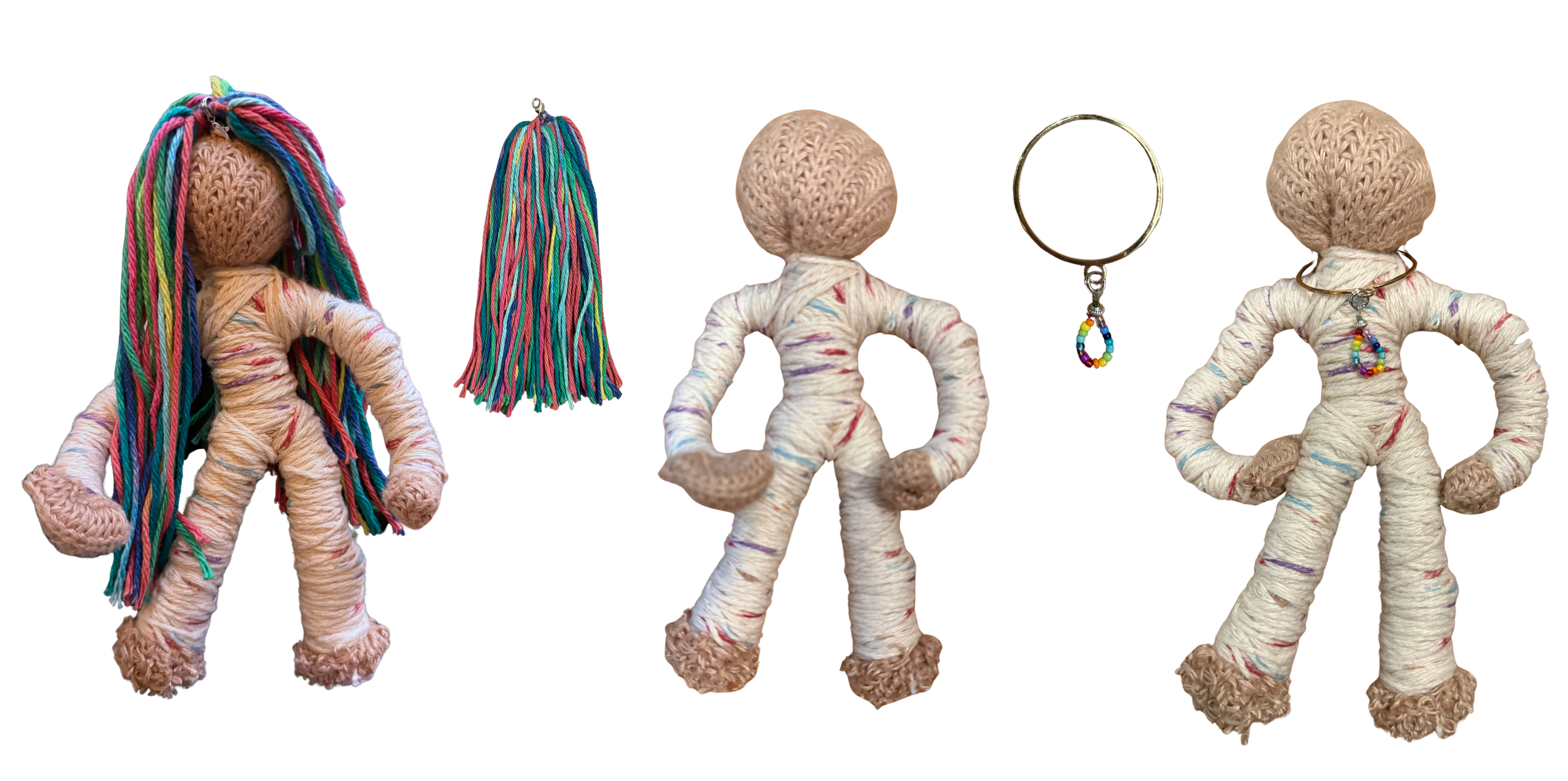
Recovery Wish Doll
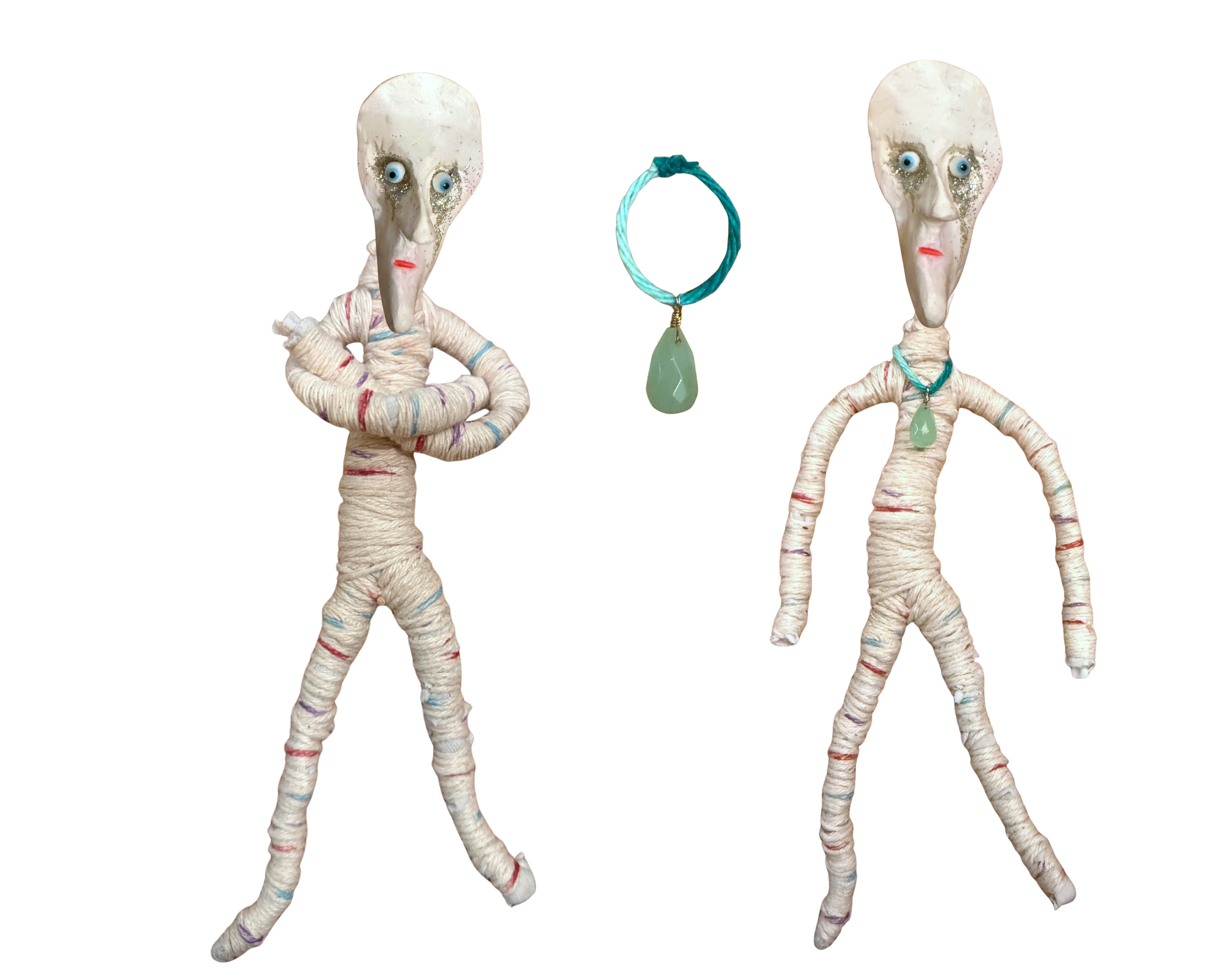
Grieving Wish Doll
Therapeutic Reflection
The Wish Doll intervention, rooted in Focusing-Oriented Art Therapy (FOAT), serves as a guided artistic process for setting intentions and manifesting change. The doll is a symbolic object that helps to fill the void between a client’s internal feelings and their external reality.
Theoretical Application
Spiritual and Imaginative Shift: The creation and subsequent "attending to" of the doll can spark a spiritual shift in the client’s life, encouraging a more active imagination.
Somatic Grounding: The hands-on, repetitive motor movements required to wrap the doll in yarn offer a relaxing, grounding experience for the client.
Identity Preservation: For clients facing medical challenges, such as chemotherapy-induced hair loss, the doll provides a safe space to process changes to physical identity through detachable hair and adornments.
Trauma and Mourning: For trauma victims, the doll can serve as a vessel for dissociation, allowing them to play out scenarios from a third-person perspective. For those in mourning, expressive faces with molded clay "tears" provide a tangible outlet for grief.
Clinical Considerations
Fine Motor Requirements: This intervention is contraindicated for those with joint pain or children under six who lack the fine motor skills needed for tight yarn wrapping.
Sensory Variations: For sick clients experiencing nausea, filling the doll's head with dried lavender can provide a soothing, aromatherapeutic benefit.
Material Safety: If the doll is intended for frequent play or sleep, it should be constructed from soft, shatterproof materials.
Be sure to discuss the client’s association and experiences with dolls. Some clients may have negative associations or religious beliefs that may make this item inappropriate to create.
Artist Statement(s)
“Recovery Wish Doll”
In this project, I explored two distinct versions of therapeutic doll making. The first, a Recovery Doll, addresses the trauma of hair loss and physical change. I designed this doll with a detachable hairstyle and necklace, allowing it to adapt its appearance just as a patient may adapt during chemotherapy. It represents the beauty and resilience that remain even when our physical identity is in flux, and how making artistic objects, such as a necklace, can be an effective way present one's identity.
“Grieving Wish Doll”
The second, a Grieving Doll, takes a more somber tone. I molded a skeletal face from clay and used beaded eyes and glittery "tears" to emphasize the sorrow. Its long, gangly limbs suggest vulnerability. A teardrop-shaped necklace can be made to express one's feelings of grief to others in a way that feels authentic to their healing process. Together, these dolls show that art can hold our highest hopes and our deepest pains, providing a "friend" to watch over us on a windowsill or under a pillow.