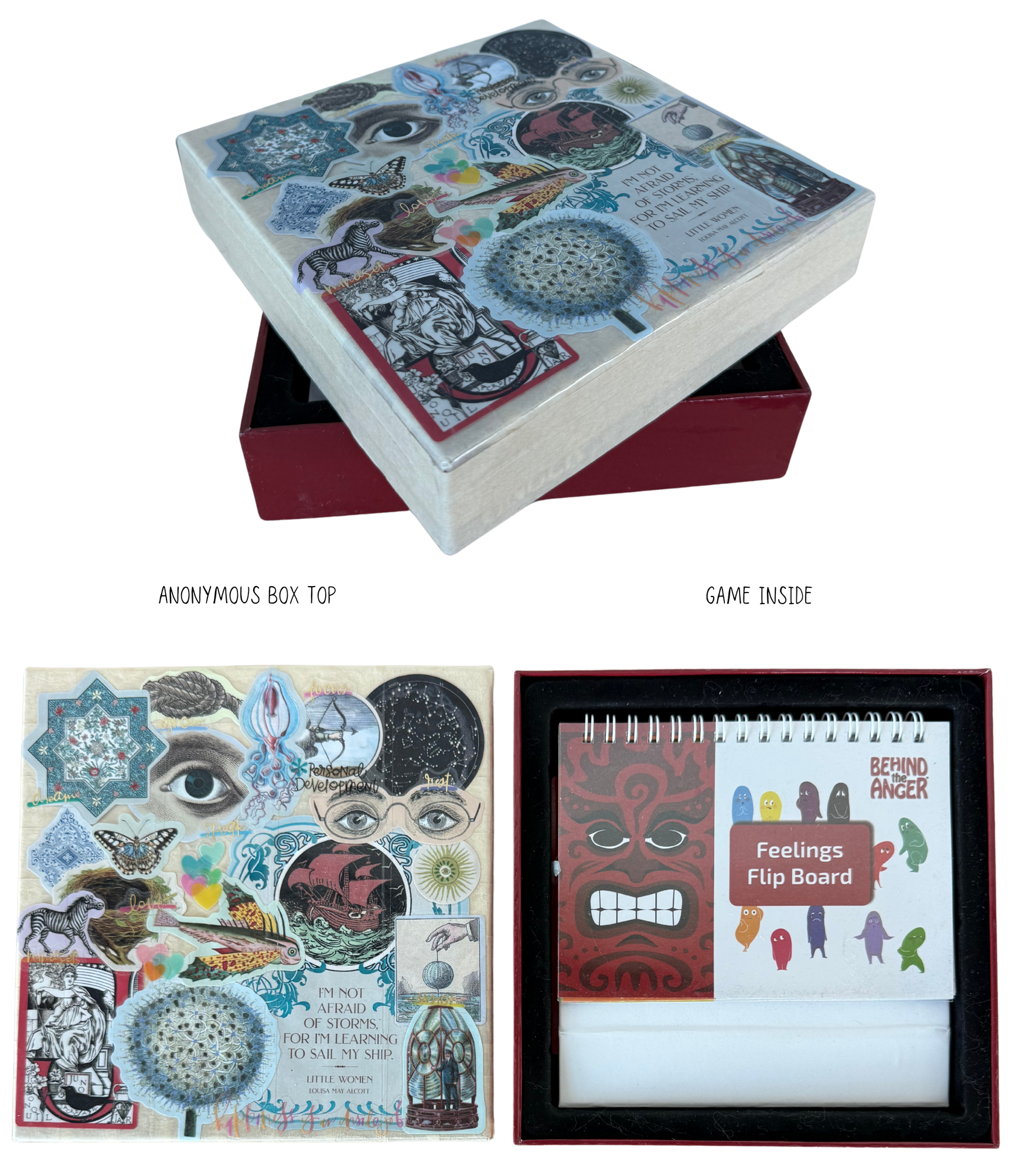
The Multimodal Explorer
(Behind the Anger Game Box)
Inside My Mind
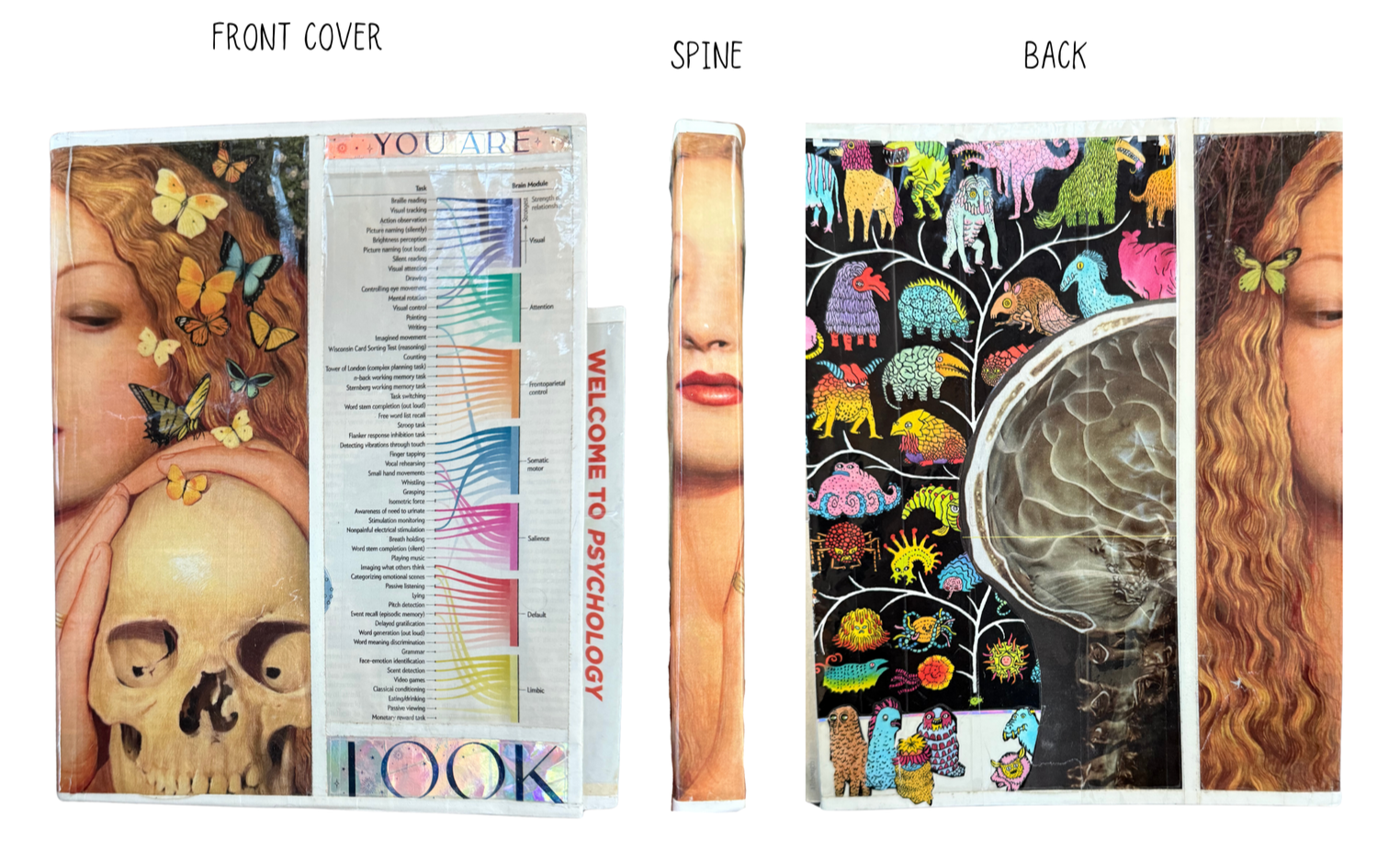
(Intro to Psychology Textbook)
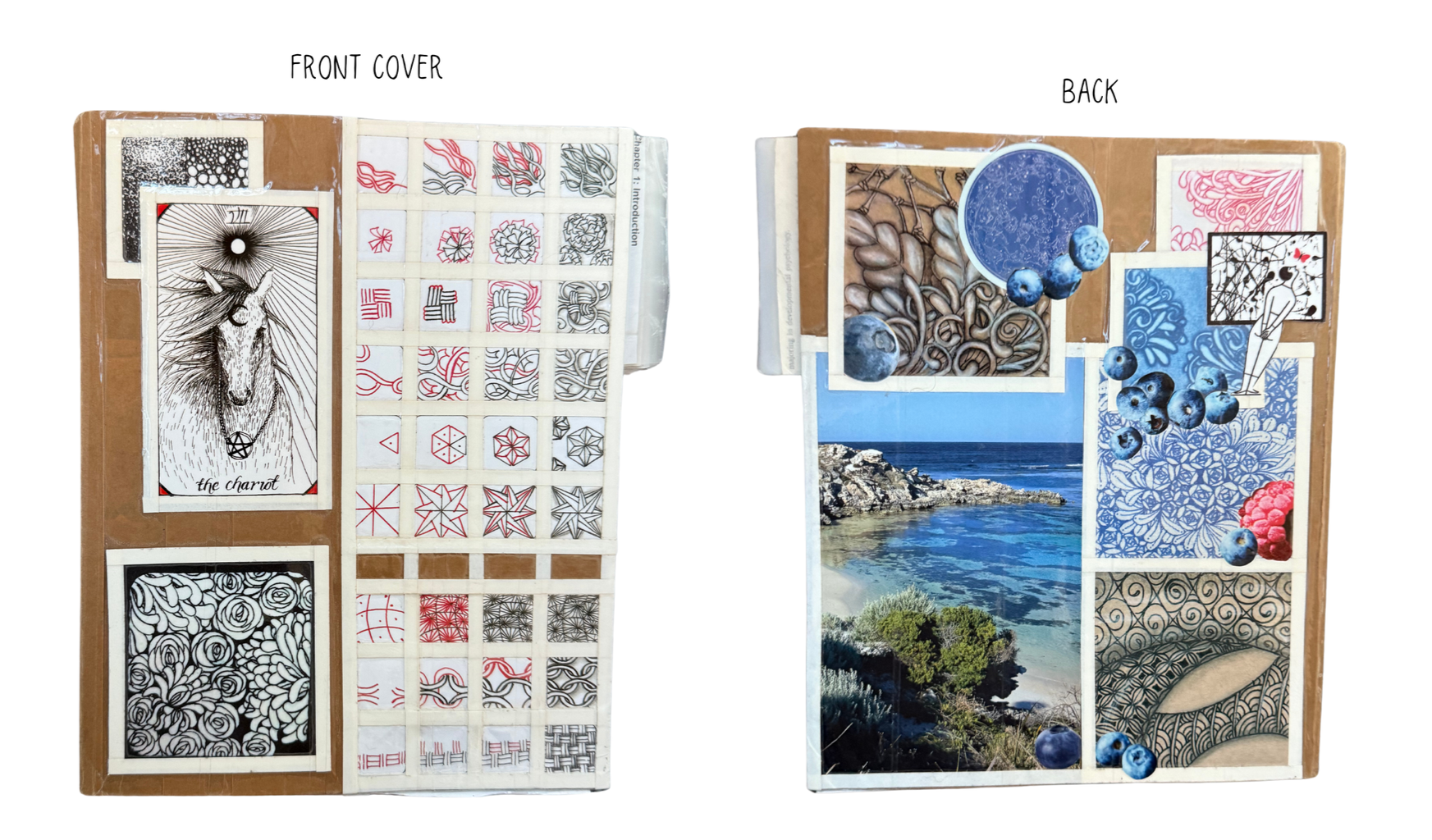
Dynamic Growth
(Developmental Psychology Textbook)
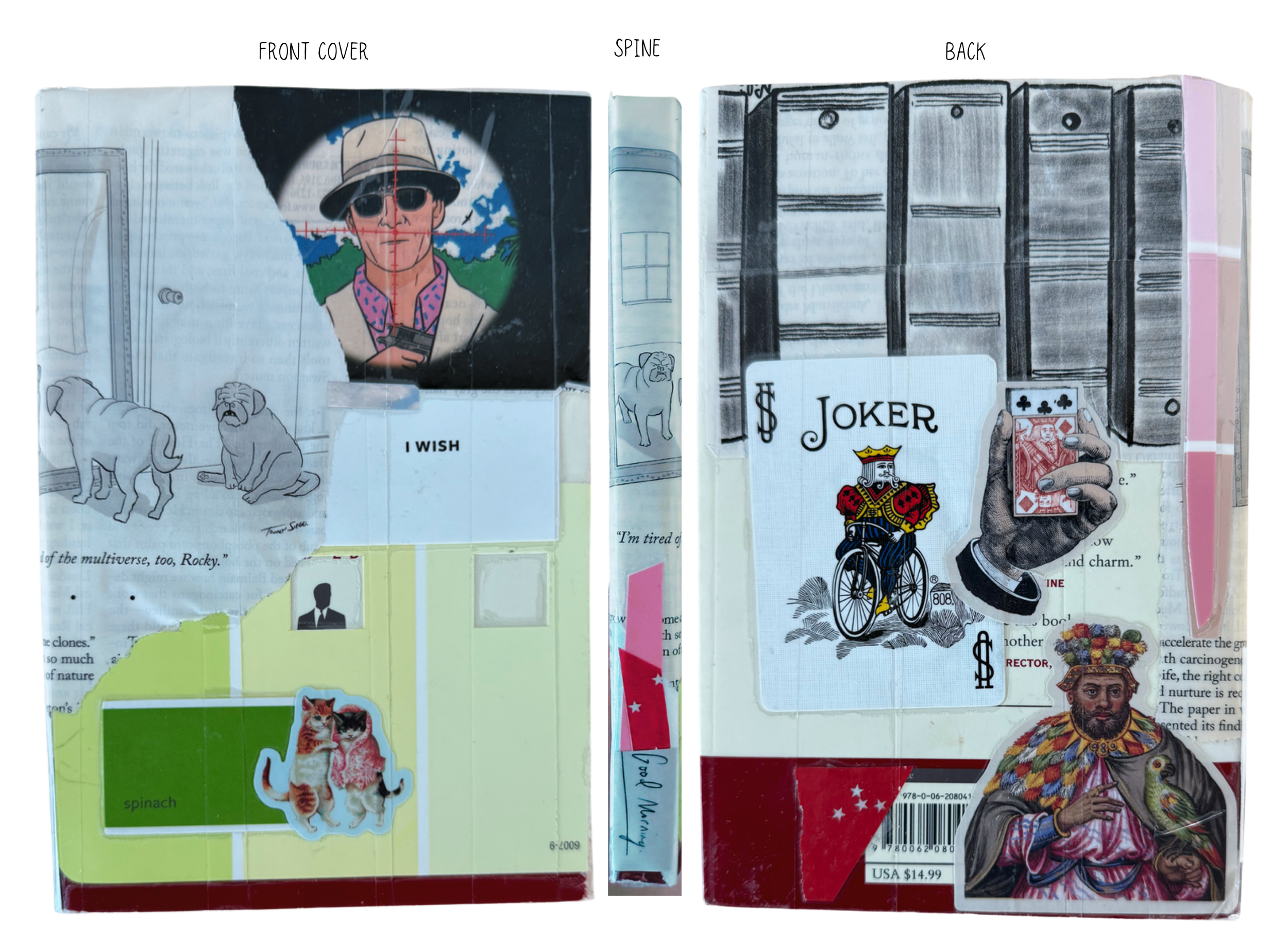
Undercover Conduct
(Male Etiquette & Socialization)
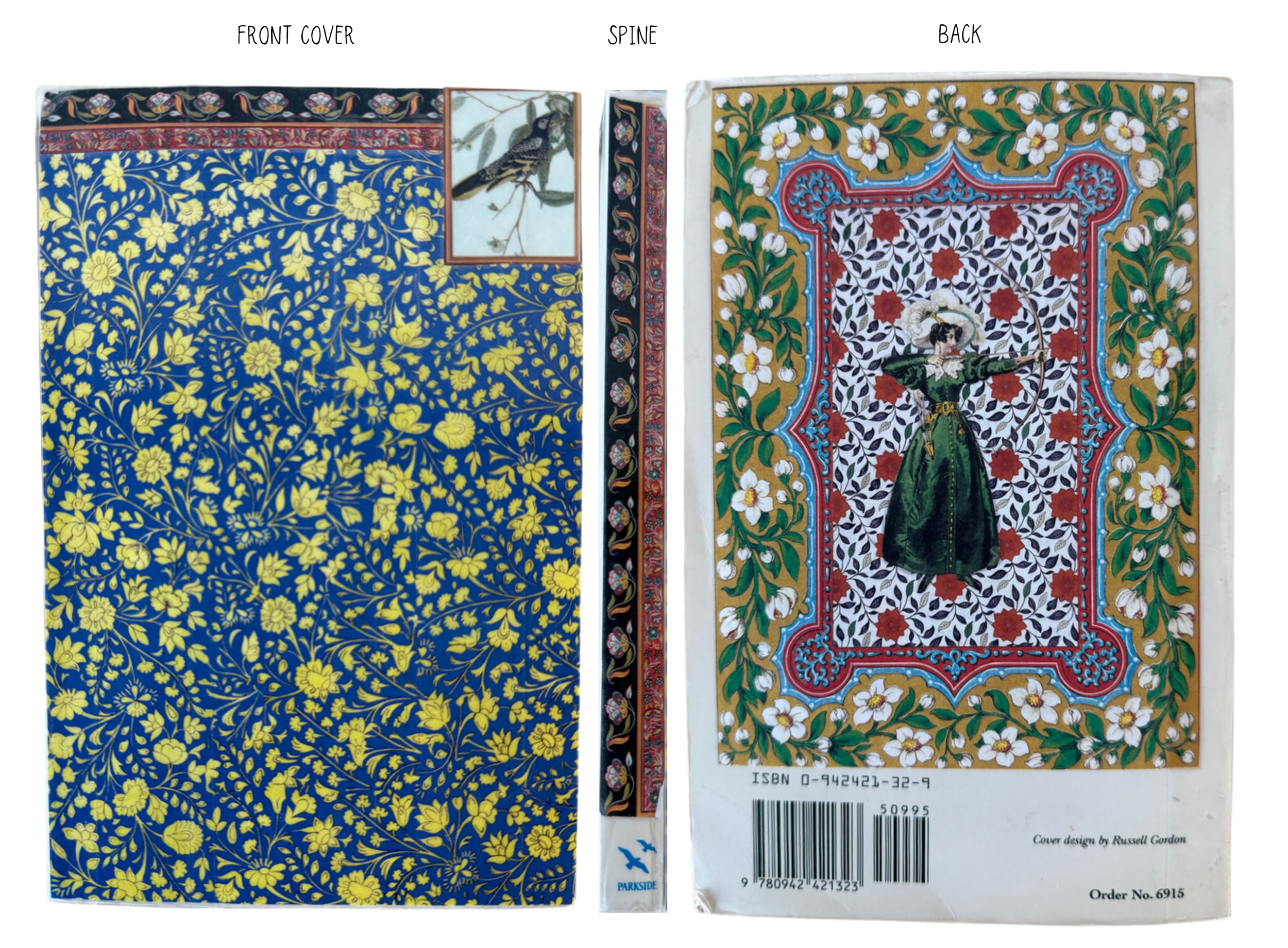
Nature’s Aim
(Feeding and Eating Habits)
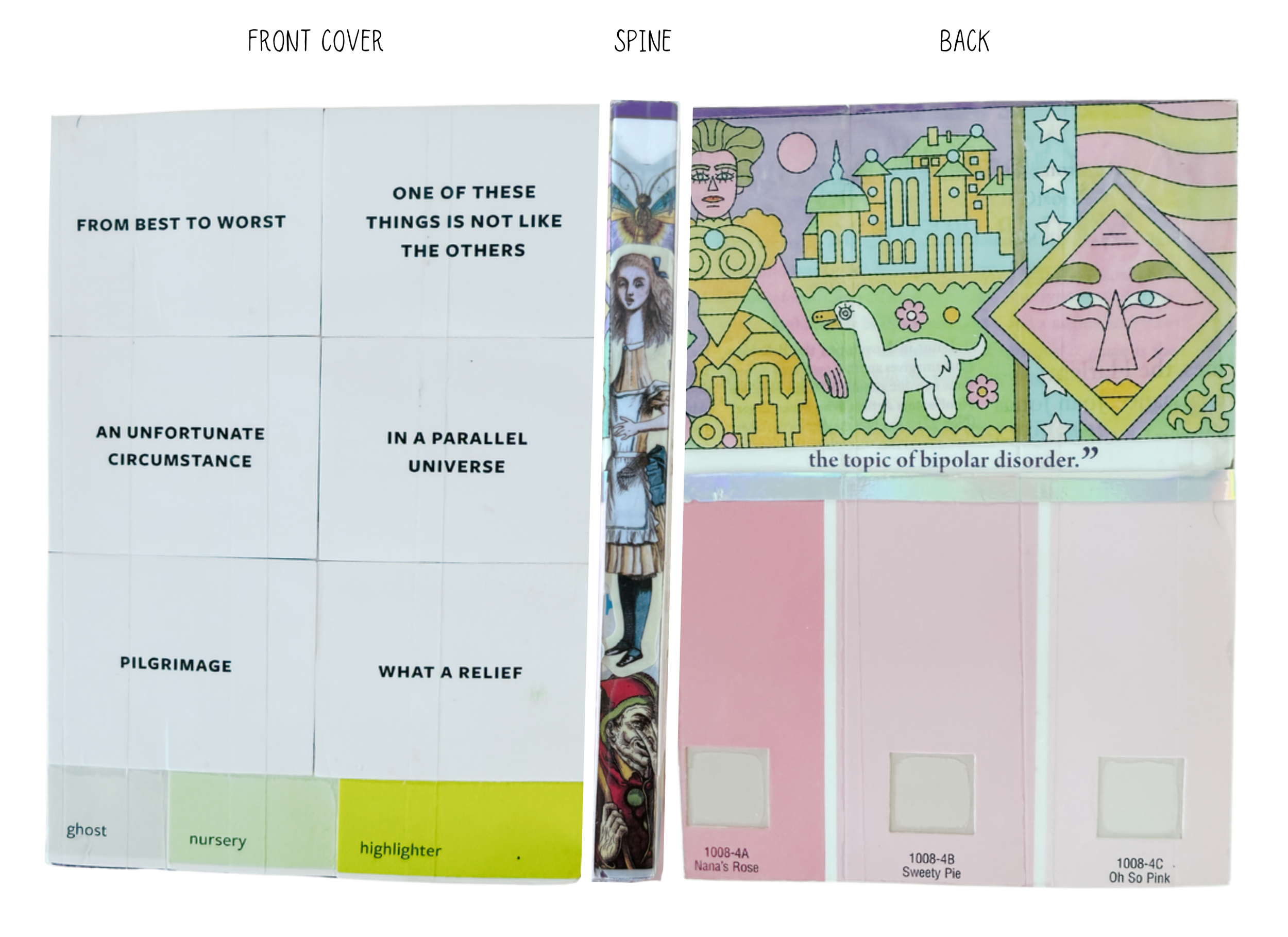
Voyage of the Duality
(Mental Health Information Book)
Therapeutic Reflection
The act of camouflaging therapeutic items—books, games, or diagnostic materials—serves as a creative exercise in autonomy and anonymity. Often, the clinical labels or imagery on these items can act as a "public unveiling" of a private struggle, creating a sense of exposure or shame. Through this intervention, the creator reflects on the item's personal significance, translating clinical language into a visual vocabulary that they identify with.
This process allows the client to control the narrative, in which the outer layer is no longer a public label. By leaving subtle "clues" or fragments of the original cover, the user can practice a gradual desensitization to the subject matter, finding a comfortable middle ground between total concealment and full disclosure. This transformation empowers the individual to carry vital information into public spaces with purpose and confidence.
Theoretical Application
This intervention is grounded in Narrative Therapy and Cognitive Behavioral Therapy (CBT), specifically focusing on externalization and self-stigma reduction.
Externalization of Stigma: By physically altering the exterior of a stigmatized object, the client separates the "problem" from the self, turning a clinical object into a personal artifact.
Gradual Exposure: Retaining small keywords or original imagery serves as a form of low-level exposure therapy, helping the user normalize their relationship with the therapeutic content at their own pace.
Aesthetic Regulation: Grounded in Neuroaesthetics, creating an "inviting aesthetic" encourages more frequent engagement with the material by making the object's sensory experience more engaging.
Psychological Ownership: Personalizing the item increases the user’s commitment to the therapeutic work, as the item now reflects their unique journey rather than a generic path.
Clinical Considerations
When implementing this intervention, clinicians should help strike a balance between protective camouflaging and avoidance. The goal is not to hide in shame, but to empower the client's choice of when and how to share their story.
Client Aim: Clients should create a visual metaphor that aligns with their goals, using the imagery as a "bridge" to the content.
Anonymity vs. Advocacy: The therapist should explore whether the camouflage is a temporary protective measure or a permanent aesthetic choice, and assess its impact on the client's public confidence.
Technique Suitability:
Collage: Best for processing complex emotions and reconciling different parts of the self.
Partial Reveal: Ideal for clients working through desensitization to a diagnosis.
Thematic Overhaul: Suitable for educational materials to increase interest and decrease academic anxiety.
Artist Statement(s)
“The Multimodal Explorer”
(Behind the Anger Game Box)
Reframes an often-activating topic into a visually serene and positive context.
The packaging lowers the user's defensive threshold, making the process of identifying emotions feel safe and approachable rather than confrontational.
“Inside My Mind”
(Intro to Psychology Textbook)
Utilizes a deep dive into personification, relating the cover imagery directly and bridging the student’s internal and external worlds.
The inviting aesthetic acts as a motivator, encouraging frequent academic engagement and curiosity.
“Dynamic Growth”
(Developmental Psychology Textbook)
Connects human development with a personal interest in art and progression.
Offers a dynamic visualization of progress and growth abstractly, steering away from dry clinical imagery.
“Undercover Conduct”
(Male Etiquette & Socialization)
Uses humor and character-driven imagery to explore the socialization narrative.
Creates a playful entry point into discussing behavioral norms and personal identity.
“Nature’s Aim”
(Feeding and Eating Habits)
Features imagery of a woman mastering archery amidst nature to symbolize discipline, goals, and focus.
The inclusion of trees and birds represents the natural developmental patterns and symbiotic relationship with nature involved in incorporating food into one’s life over time.
“Voyage of the Duality”
(Mental Health Information Book)
Keeps fragments of the original cover intact to foster gradual acceptance and desensitization of mental illness.
Incorporates personal phrases and images of adventure and growth to showcase the unique, multifaceted journey of mental health recovery.