Navigating Internal Architecture
Therapeutic Reflection
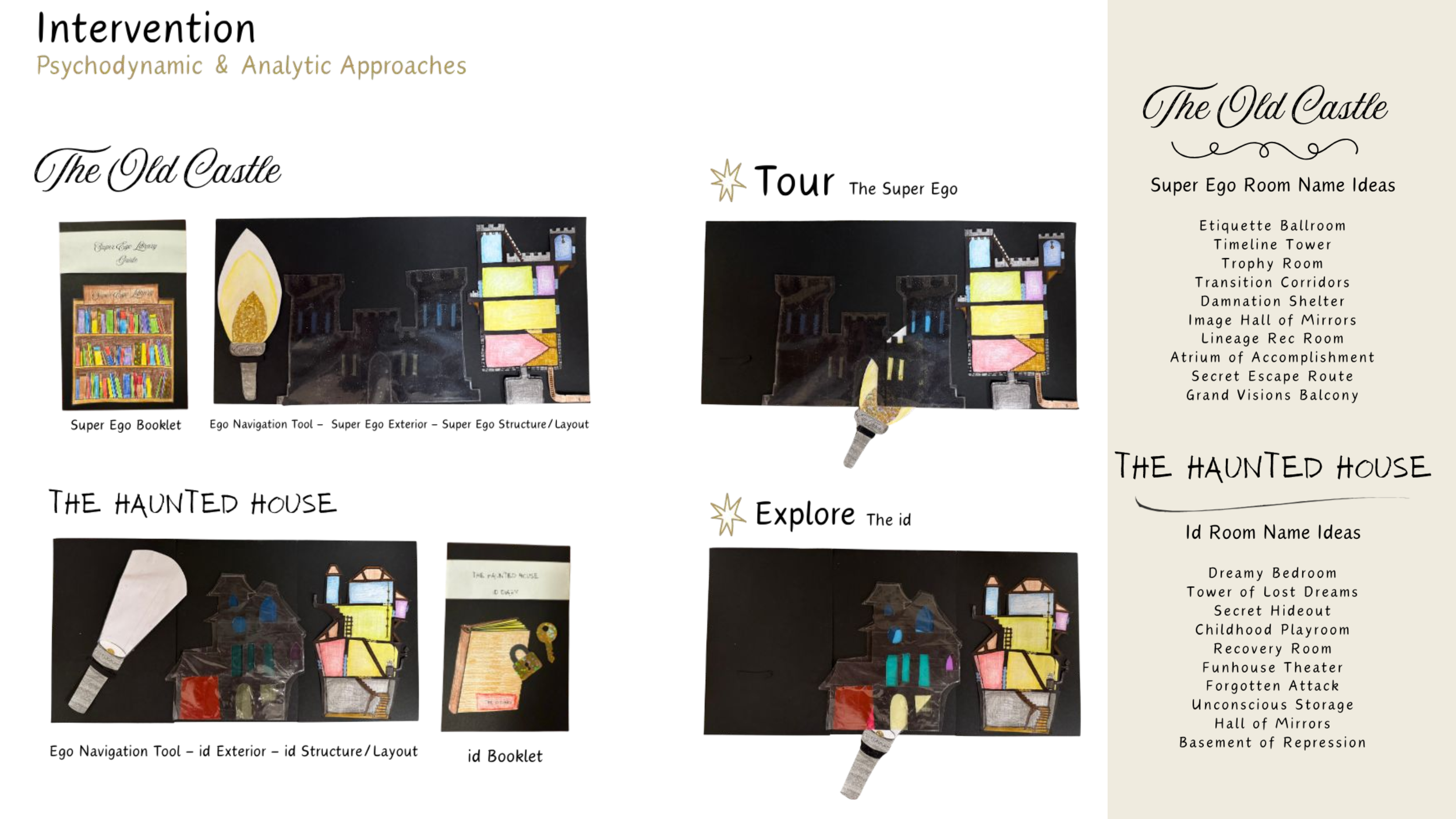
The "Touring the Superego & Exploring the Id" intervention serves as a metaphorical journey through the three-part structure of the Freudian personality. By gamifying the exploration of the self, the therapist provides a safe distance and a contained environment in which the client can objectively examine self-conflicts.
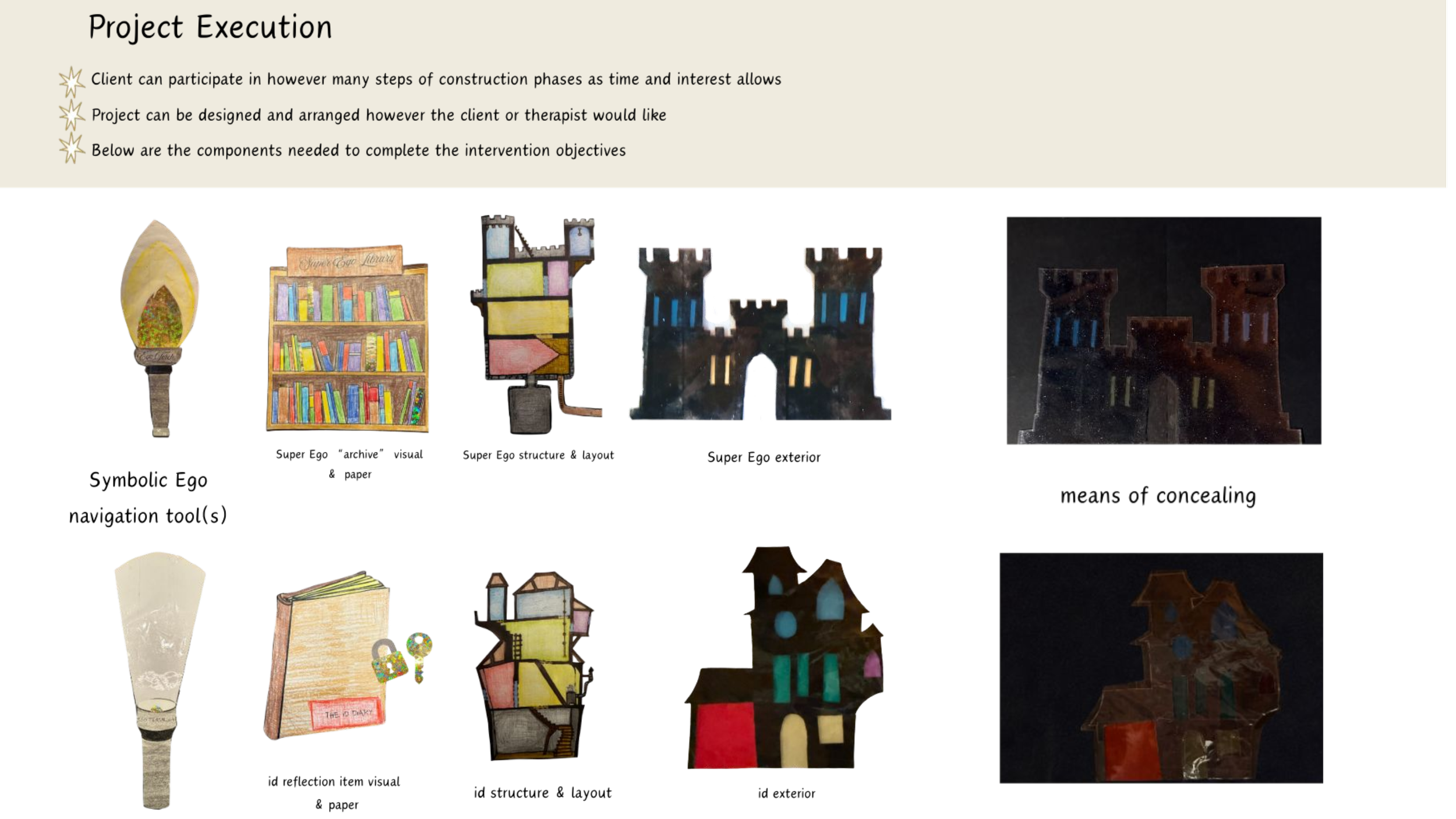
Externalization of Conflict: The use of two distinct structures (the Castle and the Haunted House) allows the client to physically separate their internalized standards (superego) from their subconscious desires (id).
The Ego as Navigator: In this game, the client’s conscious awareness is represented by tools of light—the Ego Torch and Ego Flashlight. This reinforces the clinical goal of using the ego to navigate and bring to consciousness both the ideal self and the primal self.
Archiving the Self: Using a "Library" and a "Diary" encourages the client to observe their own psyche, creating metaphors and documenting findings rather than being overwhelmed by them.
Theoretical Application
This intervention primarily draws on Psychoanalytic and Psychodynamic theories, specifically the structural model of the mind.
Id, Ego, and Superego: The Old Castle represents the Superego and its standards, ideals, and moral values held by the client and society. The Haunted House represents the Id—the subconscious needs, desires, fears, and memories that lie beneath the surface.
Shadow Work: Part 2 of the intervention encourages "shadow work," in which the client identifies the "opposites" of their superego values and explores defense mechanisms, anxieties, and unexpressed topics.
Archetypal Guidance: The intervention aligns with Jungian principles by using archetypal structures (The Castle/The Haunted House) to help creative thinkers identify things we can sense but do not have words to express explicitly.
Clinical Considerations
Safe Exploration of Taboo Topics: The objective, game-like nature of the "tour" allows therapists to introduce taboo or unexpressed topics through symbolic representation safely.
Navigating Trauma: While the "Haunted House" is a creative tool for exploring the id, therapists must be cautious when asking the client to examine subconscious memories. The "Ego Flashlight" must remain a tool of control for the client to ensure they do not become overwhelmed by what is "discovered. It can be used as a nonverbal cue to indicate the client’s boundaries, either encouraging or discouraging further discussion of specific topics.
Developmental Application: This intervention relies on the ability to understand complex metaphors and hierarchy; it is most effective for clients who can engage in high-level reflection.
Limitations of Theory: Note that while Freudian principles are used in this activity as a structure, modern applications should leave room for relational and family dynamics that may fall outside of purely Freudian motivations.
Artist Statement(s)
“Navigating Internal Architecture”
By shining the Ego Flashlight into the rooms of my Haunted House, I am no longer afraid of defining my shadows; I am simply documenting the architecture of my own subconscious in a free and creative way.
In this project, I created a two-part tour to visualize the tension between my standards and my desires. I used a color-coded room key to organize the values I hold for myself in the Old Castle, noticing how their placement and hierarchy reflect the protection of my ideals.
When I transitioned to the Haunted House, the design became asymmetrical and unstable, mirroring the id's nature. By comparing the rooms of the Castle to the corresponding rooms of the House, I explored different sources and memories behind my standards. Seeing these two buildings side-by-side allows my "inner light" to shine on the balance between who I am expected to be and what I truly desire.